Best Airline for International Travel: The Top Carriers, Ranked for 2026
There is no single best airline for international travel for every traveler, but a short list of carriers consistently comes out on top. Qatar Airways, Singapore Airlines, Emirates, ANA, and a handful of others lead the rankings year after year for a reason: they combine newer planes, better food, generous seat dimensions, and reliable on-time performance on routes where those details matter most.
What matters is that the “best” choice shifts with your route, your budget, and your seat class. A $350 basic-economy ticket on a US legacy carrier between New York and London is a completely different product from a $900 economy fare on Singapore Airlines between Los Angeles and Singapore, even though both get you to your destination. This guide ranks the major international airlines on the factors that actually shape a long-haul flight: hard product, service, food, lounge access, and value for money.
In the sections below I compare real carriers with real numbers — seat pitch, baggage policies, meal service, and typical price bands for transatlantic and transpacific routes — so you can pick the best airline for international travel on your specific trip, not just the airline that tops a generic list.
What Makes the Best Airline for International Travel
Before naming winners, it is worth laying out the criteria. A good long-haul airline is not judged the same way as a domestic one, where a 90-minute flight forgives cramped seats and no meal.
The factors that matter most on an eight- to fifteen-hour journey include:
- Seat pitch and width in economy. Extra lean-back and legroom become noticeable after hour four. The difference between a 31-inch and a 34-inch pitch is the difference between arriving fresh and arriving with sore knees.
- Cabin pressure and humidity. Newer widebodies like the Airbus A350 and Boeing 787 fly at lower effective cabin altitudes, which reduces jet lag.
- Meal quality and timing. A hot meal, a mid-flight snack, and a second service separate the top carriers from budget long-haul operators.
- Cabin crew service. Consistently warm, attentive service is the main reason Singapore Airlines and ANA rank so highly among frequent flyers.
- On-time performance and network. The best hard product means little if connections are missed. Airlines with dense hub networks recover faster from delays.
- Value, not just price. Baggage allowances, seat selection fees, and change policies can turn a cheap fare into an expensive trip.
If you are weighing which cabin to book before you even choose an airline, our economy vs premium economy comparison breaks down what those few hundred extra dollars actually buy, and our basic economy vs main cabin guide covers the fare class that trips up most first-time international flyers.
The Top International Airlines for 2026
Here is how the leading international carriers compare on the factors above. Prices are typical round-trip economy fares from major US gateways observed across 2025-2026 booking windows.
| Factor | Singapore Airlines | Qatar Airways | Emirates | ANA |
|---|---|---|---|---|
| Economy seat pitch | 32 in | 31-32 in | 32-34 in | 34 in |
| Economy seat width | 19 in | 18.5 in | 18 in | 18.9 in |
| Free checked bags (int’l) | 2 x 23 kg | 2 x 23 kg | Varies by fare | 2 x 23 kg |
| In-flight Wi-Fi | Paid on most routes | Paid on most routes | Paid on most routes | Paid on most routes |
| Typical US round-trip economy | $1,100-$1,600 | $950-$1,450 | $1,000-$1,500 | $900-$1,400 |
| Alliance | Star Alliance | Oneworld | None (codeshares) | Star Alliance |
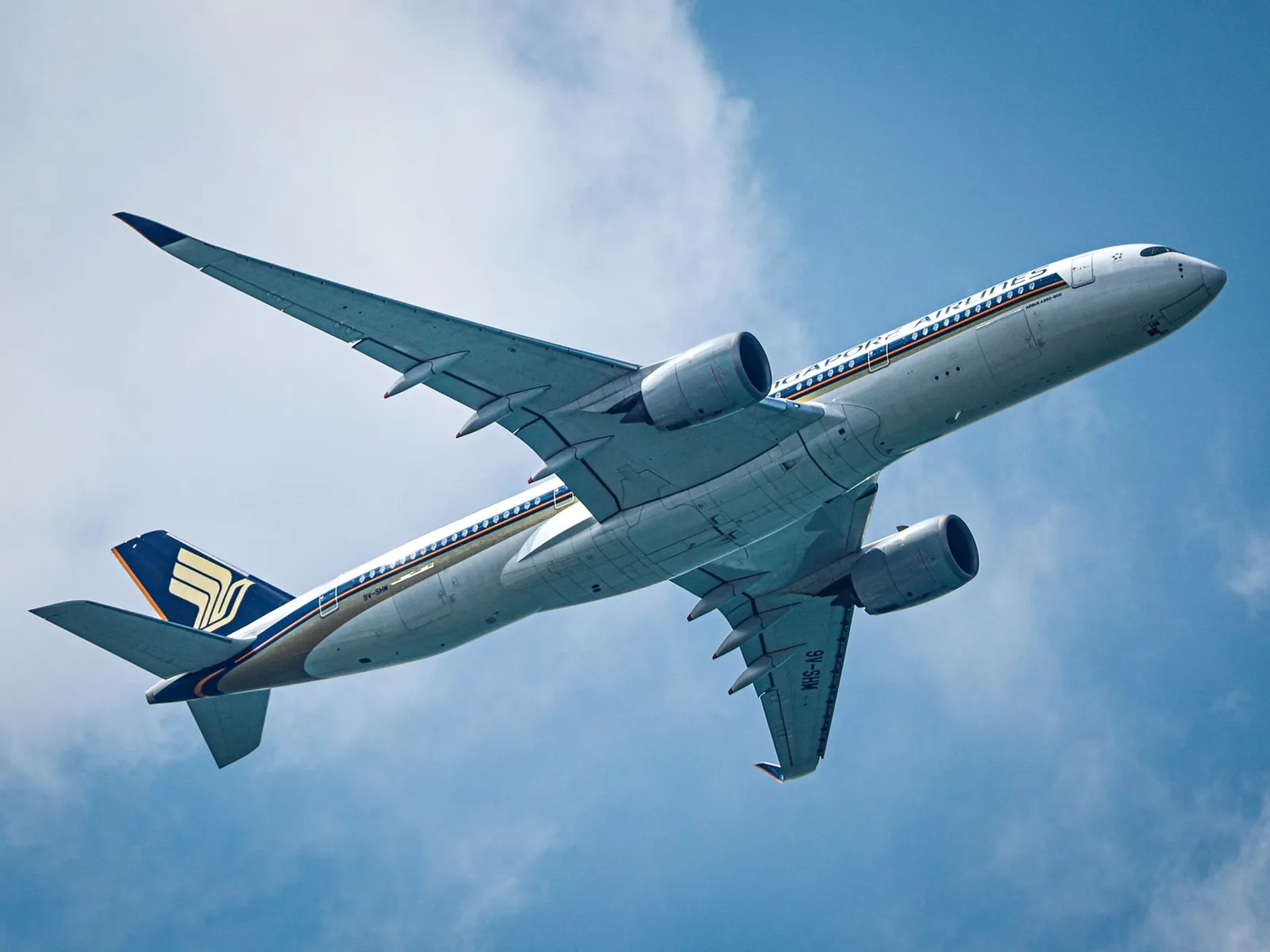
The short version: if you want the most predictable, well-rounded long-haul experience in economy, Singapore Airlines and ANA are hard to beat. If lounges and business class are your priority, Qatar Airways leads. If you want route coverage and a consistent premium-economy jump, Emirates is the strongest.
Singapore Airlines: The Best Economy Experience Overall
Singapore Airlines is the airline most frequent flyers name first, and the data backs up the reputation. Its long-haul economy cabins offer around 32 inches of pitch and a seat width of roughly 19 inches, but the real advantage is consistency: attentive crew, reliably good meals with book-the-cook options on premium routes, and one of the youngest widebody fleets in the industry built around the A350 and 787.
The carrier also operates the world’s longest flight — Singapore to New York JFK — as an all-business-class and premium-economy service, so economy travelers on that specific route should book a connection through a hub or expect to pay a premium. For everyone else, Singapore Airlines’ hub at Changi Airport adds value on its own: smooth connections across Southeast Asia, Japan, Australia, and the Indian subcontinent, and what is widely considered the best major airport in the world for layovers.
Singapore Airlines is a Star Alliance member, which means Miles & More, United MileagePlus, and KrisFlyer members can earn and redeem on the same metal. If you carry status on a US carrier, your upgrade instruments and lounge access often extend to Singapore Airlines flights, a point worth checking before you book.
Qatar Airways: The Business-Class and Lounge Leader
Qatar Airways has won Skytrax’s World’s Best Airline award eight times, more than any other carrier, and its Qsuite business class is generally regarded as the benchmark. Whether that matters to you depends on which cabin you fly. In economy, Qatar Airways is very good but not clearly better than Singapore or ANA: pitch runs 31 to 32 inches and meals are solid, though seat width on some 777 configurations is a little tighter than competitors.
Where Qatar Airways separates itself is at Hamad International Airport in Doha. Its Al Mourjan business lounge is among the best in the world, and the airline’s dense network across the Middle East, Africa, and the Indian subcontinent makes it the natural choice for travelers connecting to regions US carriers serve thinly. Fares from New York, Chicago, and Dallas to Doha and onward are frequently among the cheapest premium-cabin options, which is why the airline often lands at the top of “best value business class” lists.
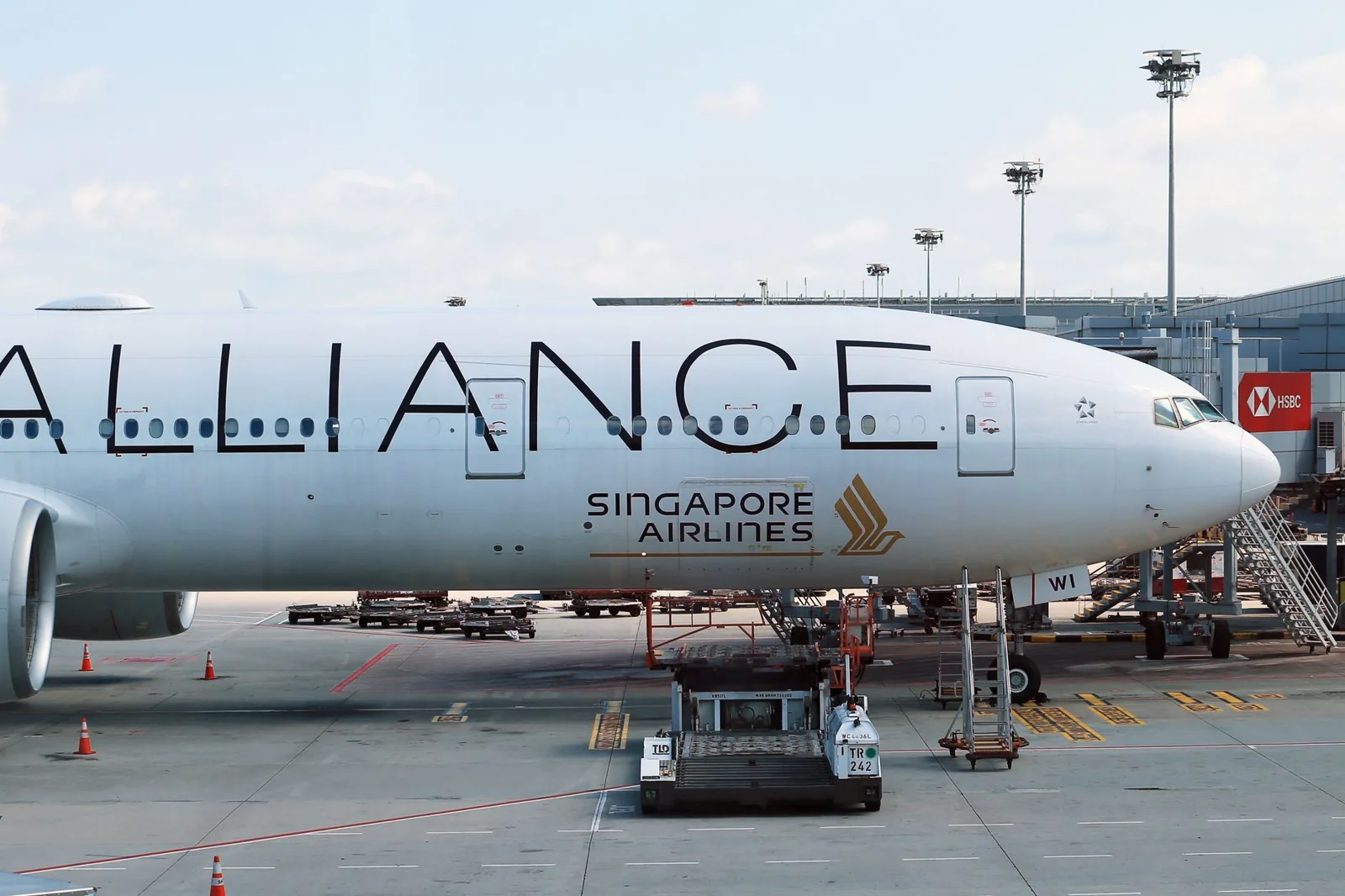
One caveat: if you are crossing the Atlantic or Pacific, flying Qatar Airways usually means a detour through Doha, which can add three to six hours versus a nonstop. Depending on your tolerance for flying time, that routing may offset the superior lounge and service. For travelers who prioritize access to a first-rate lounge before a long flight, our guide to airport lounge costs explains whether buying a day pass beats a detour.
Emirates: Best Premium Economy and Onboard Comfort
Emirates is the airline of the big A380 and the 777 that connects the US, Europe, and Africa through Dubai. Two things set it apart. First, its premium economy — introduced on A380s and gradually rolling across 777s — is widely considered among the best in the sky, with generous legroom, wider seats, and better catering than most competitors’ premium cabins. Second, no airline flies to more points in the Middle East and Africa with one connection through a genuinely 24-hour hub.
Emirates economy varies by aircraft. On the A380, economy seats are a comfortable 18 inches wide with 32 to 34 inches of pitch, and the upper deck’s 2-4-2 layout on some configurations feels less crowded. On the older 777s, seat width drops to 17 inches in a 3-4-3 layout, which is noticeably tighter than Singapore or ANA. Check the aircraft type before you book — the A380 and the 777 are two very different economy experiences wearing the same livery.
Emirates is not in a major alliance, which means earning miles through Star Alliance or SkyTeam partners is limited. If flexible award redemption matters to you, Singapore Airlines, Qatar Airways, ANA, and United and Delta all integrate more cleanly into a global alliance ecosystem.
ANA (All Nippon Airways): The Pick for Japan and Transpacific Routes
ANA is routinely ranked alongside Singapore Airlines for economy service, and on transpacific routes it is often the best airline for international travel to and from Japan. Its economy seats stretch to 34 inches of pitch on international 787s, among the roomiest in the industry, and the airline’s reputation for cleanliness, punctuality, and thoughtful meal service is well earned.
The practical advantage is network. ANA’s Tokyo Narita and Haneda hubs connect smooth to destinations across Japan and East Asia, and its transpacific routes — Tokyo to Los Angeles, San Francisco, Seattle, Chicago, and New York — are consistently strong. Haneda in particular is far closer to central Tokyo than Narita, which shaves hours off a connection into the city.
ANA is a member of Star Alliance and jointly operates transpacific services with United, which means United MileagePlus members can book, upgrade, and earn on ANA-metal flights. If Japan is your final destination or your gateway into Asia, ANA should be at the top of your shortlist.
US Carriers: When Delta and United Are the Right International Choice
The Gulf carriers and Asian flag carriers win the awards, but US carriers win plenty of international trips for a very different reason: nonstop coverage. Delta Air Lines and United Airlines fly hundreds of daily transatlantic and transpacific departures from hubs across the country, and no Gulf carrier can match that convenience from cities like Atlanta, Minneapolis, or Denver.
The honest assessment: on hard product and economy service, US carriers generally trail Singapore, Qatar, and ANA. But the gap has narrowed, and on the right aircraft the experience is genuinely good. Delta’s A330-900neo and A350 flights feature updated cabins and solid catering, and United’s premium-economy product (Premium Plus) handily beats its standard economy. The business-class Polaris and Delta One suites are competitive on a like-for-like basis with what you might otherwise detour through Doha or Dubai to reach.
The decisive factors are usually price and routing. A direct Delta flight from Atlanta to Amsterdam for $700 is almost always the better call than a $900 Qatar Airways routing that adds an eight-hour connection through Doha — unless lounge access, a better bed, or elite mileage earning changes the math. Book on the airline that flies nonstop from your home airport first, then upgrade the cabin or the carrier only if the savings justify it.
How to Choose the Right Airline for Your Trip
The best airline for international travel on paper is not always the best airline for your specific flight. Work through these in order:
- Check who flies nonstop from your airport. A good nonstop always beats a great connection for anything under ten to twelve hours.
- Identify the aircraft type. An A350, A380, or 787 is almost always a better ride than an older 777 or A330. SeatGuru and the airline’s own seat maps tell you what is on your flight.
- Compare the total fare, not the headline price. Add seat selection, checked bags, and change fees. Our basic economy vs main cabin guide shows how fast a cheap fare gets expensive.
- Factor in your status and miles. If you hold Star Alliance or SkyTeam status, staying within that alliance usually earns more and upgrades more reliably. Our airline alliance comparison maps the major ones.
- Look at the connection quality. If you must connect, Changi, Doha Hamad, and Haneda are in a different league from most other hubs for layovers.
For a broader, data-driven look at when to book, resources like The Points Guy and Google Flights’ price insights are worth checking. The Points Guy maintains up-to-date reviews of every major international airline, and NerdWallet’s guide to choosing an airline is a solid primer if you are new to long-haul travel.
Frequently Asked Questions
Which airline is ranked the best in the world?
Qatar Airways has won Skytrax’s World’s Best Airline award eight times, more than any competitor, with Singapore Airlines and ANA regularly trading the top spots. “Best” depends on class of service, but Qatar, Singapore, ANA, and Emirates consistently occupy the top tier of global rankings.
What is the best airline for international travel on a budget?
For most US travelers, the cheapest good option is usually the legacy carrier flying nonstop from your home hub — Delta, United, or American. Fares of $400-$700 round-trip across the Atlantic are common in shoulder season. Budget long-haul operators like Norse Atlantic and French Bee can be cheaper but charge for nearly everything beyond the seat.
Is business class worth the cost on international flights?
On flights over eight hours, business class transforms the trip — a lie-flat bed means you actually sleep. It usually costs three to five times an economy fare, so the deciding factor is whether arriving rested is worth the premium. A middle-ground alternative is premium economy, which adds real legroom and recline for a fraction of the cost.
Do baggage allowances differ between international airlines?
Yes, substantially. Top carriers like Singapore Airlines and ANA typically include two 23 kg checked bags on international economy fares, while basic-economy fares on US carriers often include none. Always confirm the allowance for your specific fare class before booking, since the difference can add $100 or more each way.
Which alliance has the best international coverage?
Star Alliance (United, Lufthansa, Singapore, ANA, Turkish) and SkyTeam (Delta, Air France-KLM, Korean Air) both cover the globe well. OneWorld (American, Qatar, British Airways, Cathay) is strong too but thinner in some US interior markets. Staying within one alliance maximizes earning and upgrade chances — see our airline alliance comparison.
The Bottom Line
For pure long-haul economy quality, Singapore Airlines and ANA are the carriers to beat, and Singapore Airlines is the best airline for international travel if you value consistency, service, and a hub that makes connections painless. Qatar Airways wins on business class and lounges. Emirates wins on premium economy and onboard comfort on the A380. US carriers win on nonstop coverage and often on price.
The right move is to let your route decide first. Find the nonstop options from your home airport, check the aircraft, and then compare the full fare — bags, seats, and fees included — across the two or three airlines that actually make sense for your trip. Do that, and you will land on the genuinely best airline for your next international flight, not just the one that tops this year’s awards list.